
About this video
If you want to start a real conversation with your kid about what's actually happening online — tonight, no big announcement, no scheduled meeting — here's a question that's been working for parents in our partner communities:
'Have you ever been in a group chat where someone got picked on, or left
Generated from MentalSpace School: Georgia K-12 Mental Health and Compliance Guide
Transcript
Imagine a heavy stone wall rapidly assembling itself block by block, completely sealing off a pathway right in front of you. That sudden impenetrable barrier is what happens when parents suspect cyberbullying and interrogate their kids. The moment you sit them down to demand what's happening online, their defensive walls go up. To bypass those defenses, we use a structured four-step process called the family to district handoff. By following these specific steps, you collapse the timeline between your initial concern and your child sitting with a licensed clinical professional from weeks down to hours. You only need two things: a quiet low-stakes moment at home and your school counselor's email address. Relying on this integrated system works because it
removes the emotional friction. Instead of a parent trying to play detective, you rely on a clear pipeline of professionals. Step one requires the right environment. Do not announce a family meeting. Wait for an ordinary unstructured moment, like riding in the car or washing dishes. Then, you ask this precise question: "Have you ever been in a group chat where someone got picked on or left out on purpose? You don't have to tell me names. I just want to understand what's normal in your world right now." This phrasing works for three specific reasons. First, it completely avoids accusing anyone, including your child. Second, it removes the pressure of personal disclosure. Your child doesn't have to confess their
own involvement in the very first answer. Third, it leaves the conversational door open. Even if they shrug it off tonight, you've set a safe baseline for a real conversation tomorrow or 3 months from now. Warning tone. If they do answer and reveal more than you expected, resist the urge to lecture or demand names. Your only goal in step one is to gather baseline behavioral data. You are not trying to solve the underlying social problem tonight. Now that you have that baseline data, you transition the issue from your living room to the school district. Step two is to send a quiet flag. This UI mock-up shows exactly what that looks like. A brief, calm email to
the school counselor requesting a quick check-in with your student. The biggest mistake parents make here is trying to mediate the peer dynamics themselves by calling other parents or investigating the threat. By transferring this preliminary data to a neutral school professional, you shift the trajectory of the issue. You move it out of the realm of peer conflict and directly into the realm of structured care. Over on the district side, the counselor receives your flag and initiates step three. The counselor uses a four-quadrant matrix to scan for clinical signals rather than disciplinary facts. They look for sudden shifts in mood or social withdrawal. They also check for disruptions in sleep patterns or unexplained somatic complaints like stomach
aches. By prioritizing these health markers over the details of who said what, the counselor can maintain a non-investigative supportive stance. The focus remains on the student's internal experience rather than a disciplinary investigation. Normally, if a counselor identifies those clinical signals, the process stalls. The student hits a massive waiting period before they can actually see a therapist. Step four solves this. Mental space provides an unbroken link from counselor to a clinical team. The result is a same-day teletherapy assessment with a culturally competent therapist. This is accessible because Mental Space accepts broad insurance and is zero cost with Medicaid. Throughout the entire referral and treatment process, strict HIPAA and FERPA compliance safeguards protect the student's privacy. Eliminating
the waiting period is the mechanical advantage here. By providing professional care within hours of the flag, you stop a cyberbullying incident from escalating into a mental health crisis. Think of this system like a glowing electronic circuit board. When that final connection loop closes, a bright pulse of light activates the network. This comparative timeline chart illustrates the result of that closed loop. By connecting the parent's home question directly to clinical intervention, we treat the emotional trauma of cyberbullying before it manifests as chronic withdrawal. Because treatment begins immediately, students are far less likely to develop the school avoidance behaviors that typically follow bullying. This leads to measurable district outcomes: an 89% improvement in attendance and a 92%
reduction in reported student anxiety. Because the family is kept informed and involved at every stage of the clinician-coordinated care, the model generates an 85% family satisfaction rate. Parents and administrators can take action today by sharing this protocol, ensuring your district has the necessary support to meet the HB268 compliance deadline by July 2026. True student safety is achieved by replacing fragmented emotional reactions with a single integrated clinical system that works for the family and the school alike.
More videos
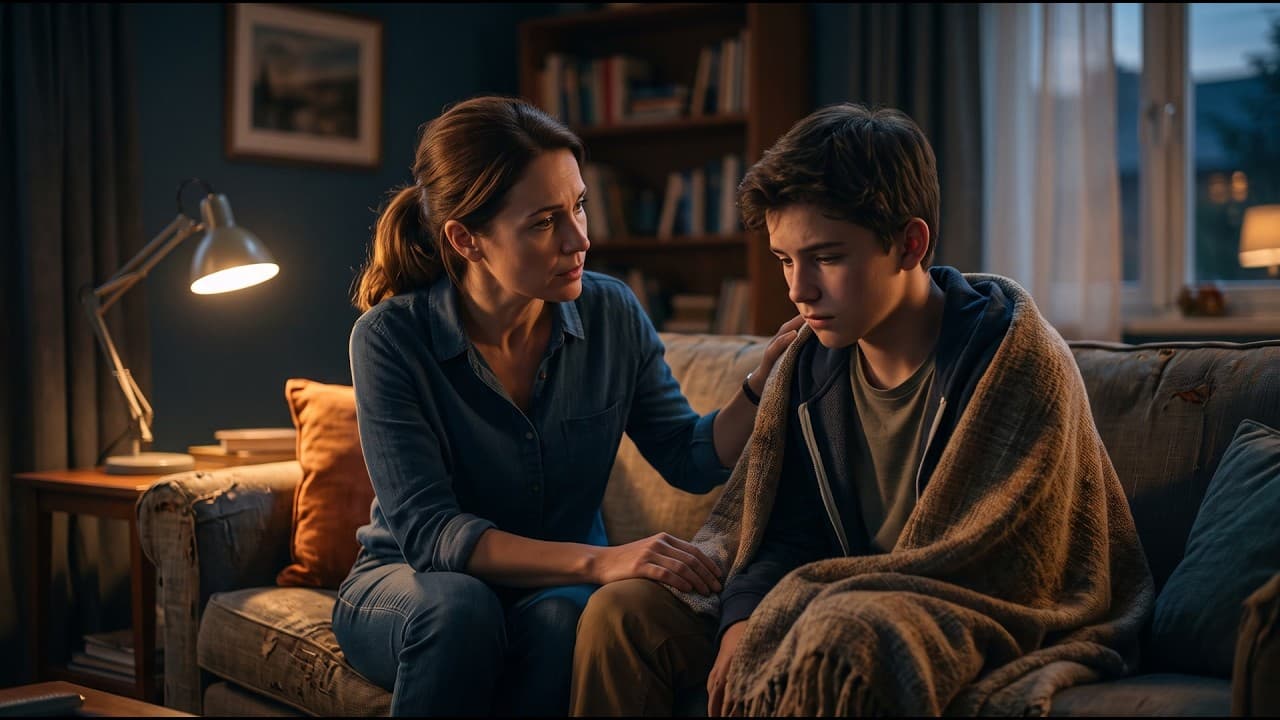
How to help a teen with severe depression?
How to help a teen with severe depression?

Students Raising Siblings: Signs Teachers Miss
Educators and parents: some of the most responsible kids in your building are also the most tired.

Chronic Illness & Student Anxiety: Signs and Support
A student with epilepsy can be fully prepared to manage a seizure and still spend every class worrying about having one in front of classmates.
Bring this kind of support to your school
Teletherapy, onsite clinicians, live workshops, and HB-268 compliance support for K-12 districts. Book a 15-minute consultation.
Get started