
The MentalSpace School Journal
Research-grounded articles for school administrators, counselors, and educators — HB 268 compliance, universal screening, threat assessment, and what good school mental health looks like day-to-day.

Latest
From the Journal
 Family & Parent Support
How to help a teen with severe depression?
How to help a teen with severe depression: what to do in the first week, what to say, how treatment works, and what a Georgia school can put in place.
 Family & Parent Support
Student Caregivers: Signs Teachers Miss and How Schools Help
Student caregivers often hide behind tardies and tired eyes. Learn the signs teachers miss, why discipline backfires, and how Georgia schools can help.
 School Mental Health
Anxiety in Students With Chronic Illness: Signs and Support
Anxiety in students with chronic illness is easy to miss. Learn the signs in kids with diabetes, asthma, or epilepsy and how schools can coordinate support.
 School Mental Health
Grade Anxiety in Students: Signs and How Schools Help
Grade anxiety in students explained: classroom and home signs, what helps parents and teachers, and how Georgia districts plan around grading windows.
 School Mental Health
School Therapy Partnership vs. a Referral List
A school mental health partnership replaces a static referral list with a named therapist team, same-day access, and a closed loop back to the counselor.
 School Mental Health
Culturally Competent Care in Schools: What It Is
Culturally competent care in schools changes who opens up. What it means, why quiet students get mislabeled resistant, and what districts should ask.
 Family & Parent Support
School Mental Health Referral: How to Talk to Parents
School mental health referral calls succeed or fail in the first thirty seconds. Five moves that turn a caregiver conversation into a first appointment.
 School Mental Health
Student Disclosure: A First-Five-Minutes Guide for Teachers
Student disclosure guide for Georgia educators: what to say in the first five minutes, what not to promise, mandated reporting rules, and how to hand off.
 School Mental Health
Supporting a Grieving Student: What Happens After Week One
Most schools handle a student death well for a week. Here is the plan for week three and beyond, plus where normal grief ends and clinical assessment begins.
 Family & Parent Support
Culturally Competent Care in Georgia Schools
"Family declined services" often means the fit was wrong, not the family. How culturally competent school mental health care in Georgia earns the second appointment.
 Family & Parent Support
Parent Consent: Getting Families to Say Yes
Parent consent for school counseling is where most referrals stall. Learn the four questions families ask, and the conversation design that raises conversion.
 Crisis Response
Student Crisis Response: A Same-Day Playbook
A student crisis response plan is only real if staff can act without the binder. Here is the same-day first-hour pathway and a five-minute tabletop test.
 Family & Parent Support
School Therapy Cost: Medicaid, Insurance & $0 Copay
School therapy cost, answered plainly: $0 with Medicaid, verified rates with private insurance, and why travel and missed work are the real barrier for families
 Educator Wellness
Teacher Burnout: Warning Signs Georgia Schools Miss
Teacher burnout warning signs explained — how secondary traumatic stress builds in school staff, and the structural supports Georgia districts need.
 School Mental Health
School Refusal: Signs, Causes, and What Actually Helps
School refusal is not truancy. Learn the attendance patterns that flag it in week three, why pressure backfires, and what graded re-entry actually requires.
 Educator Wellness
Administrator Burnout: The Retention Risk Districts Miss
Administrator burnout rarely looks like collapse. Learn the early signs in principals and APs, why it drives turnover, and how districts can build support that leaders will actually use.
 Crisis Response
Cyberbullying in Schools: What Actually Works
Cyberbullying starts off-campus and lands in your hallways. Learn the warning signs, the documentation mistake that stalls investigations, and how to run conduct and clinical tracks in parallel.
 School Mental Health
Fall Break Re-Entry Dips: What Schools See on Day Three
Fall break re-entry dips are predictable. Learn the 72-hour pattern schools miss, the early indicators in clinic and tardy data, and how to build a same-day referral path.
 School Mental Health
Student-Athlete Mental Health: What Coaches Should Watch
Student-athlete mental health has no protocol in most schools. Learn the warning signs, why coaches move the needle fastest, and what to build before the season.
 School Mental Health
Military-Connected Students: Mid-Year Arrival Support
Military-connected students arrive on orders, not the school calendar. Learn why standard screening misses them and how districts can protect continuity of care.
 School Mental Health
Supporting Students in Foster Care: A District Guide
Students in foster care change schools often, and relationship-based supports reset every move. Here's what districts can change to protect continuity of care.
 School Mental Health
Friendship Anxiety: The Student Who Says They Don't Care
Friendship anxiety rarely looks like distress. What to watch for in the first weeks of school, and the structured supports that actually help students connect.
 Family & Parent Support
Back-to-School Screen Time Reset That Actually Sticks
A back-to-school screen time reset that works: start with sleep, swap instead of subtract, set a measurable goal, and expect a rough first week.
 School Mental Health
Student Belonging: Why Lunch Scares the New Kid
Student belonging is engineered, not hoped for. The 20-day protocol, the week-three check-in schools skip, and the quiet warning signs staff should watch.
 Clinical Practice
When Sleep Debt Looks Like ADHD in Students
Sleep-deprived teens and teens with ADHD look identical in class. Get the two-week reset protocol and the screening sequence that protects your evaluation capacity.
 Family & Parent Support
Morning Meltdowns: The Signal Schools Miss
Morning meltdowns before school signal anxiety, sleep debt, or early school avoidance. Learn why August is the cheapest month to act and how to build a referral trigger.
 School Mental Health
The 9th Grade Transition: What Districts Miss
Ninth grade predicts on-time graduation better than test scores. Learn what really drives the freshman drop and how to close the seven-day referral gap in your district.
 Crisis Response
School Crisis Response Plan: Building One That Works
A school crisis response plan fails at the seams, not the document. Learn the five failure points districts hit and how to build clinical readiness before you need it.
 School Mental Health
Middle School Transition: Supporting Rising 6th Graders
The middle school transition drives measurable declines in grades, self-concept, and engagement. Learn what to watch for in weeks one to six and how to intervene early.
 School Mental Health
The First 30 Days: Student Mental Health at Year Start
The first 30 days of school shape the whole year for student mental health. Learn what surfaces early, why October escalations start in August, and how to build access.
 Educator Wellness
Teacher Burnout and Staff Wellness in Schools
Teacher burnout is not a resilience problem. Learn what educators actually absorb, why EAP programs go unused, and what lowers the barrier to real support.
 Crisis Response
School Crisis Response: A Readiness Guide
A school crisis plan is only real if a student can reach a clinician the same day. Use this readiness stress test to find the gaps before the year starts.
 School Mental Health
Back-to-School Anxiety: Signs and What Helps
Back-to-school anxiety often shows up as stomachaches, not worry. Learn the signs by age, the line between normal and clinical, and what actually helps.
 Clinical Practice
Substance-Induced Mood Changes in Teens: A School Guide
Substance-induced mood changes in teens can look like depression or anxiety. See how alcohol, cannabis, and vaping shift teen mood, and how schools can respond.
 School Mental Health
Pediatric Emetophobia: When Fear of Vomiting Hits School
Pediatric emetophobia — an intense fear of vomiting — can drive food avoidance, nurse visits, and school refusal. Learn the signs and how CBT exposure helps.
Listen to the MentalSpace School podcast
Three new episodes a day for K-12 administrators, counselors, and educators — HB 268 updates, threat assessment, and the day-to-day of school mental health. Subscribe wherever you listen.
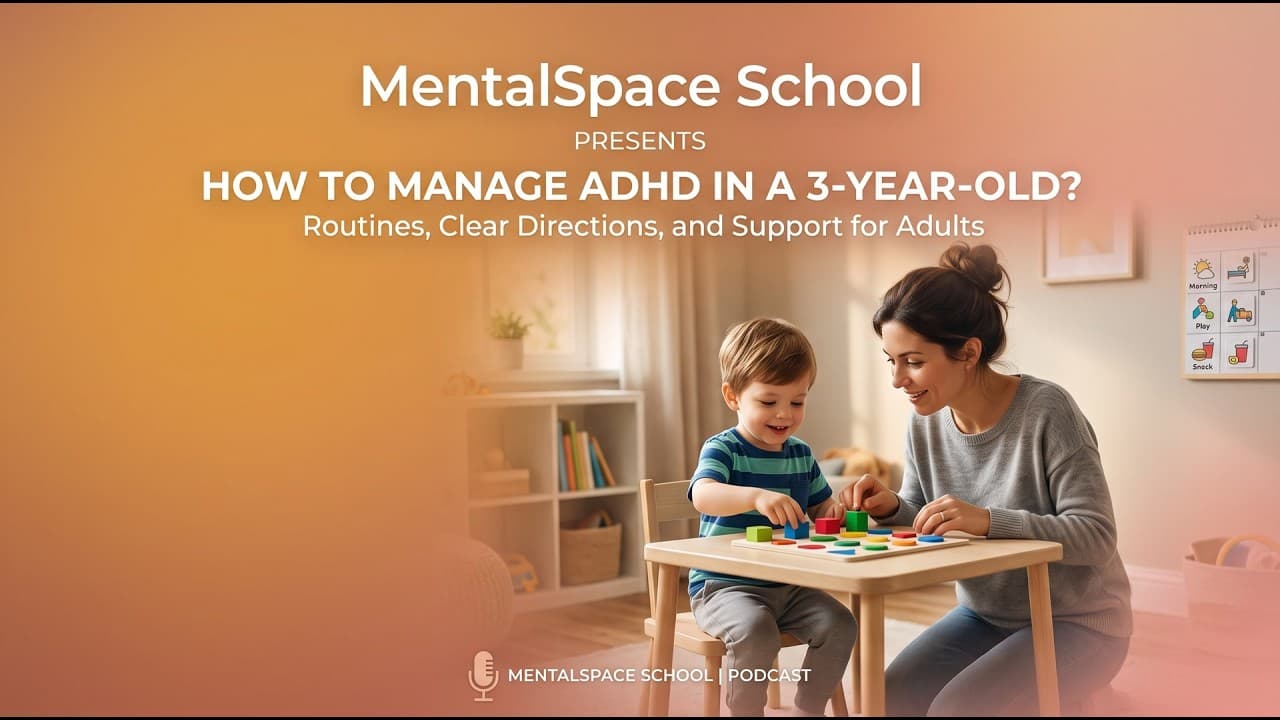 21 min
How to manage ADHD in a 3 year old? — Full Episode | K-12 School Mental Health
Oct 10, 2026
 22 min
How to help a teen with severe depression? — Full Episode | K-12 School Mental Health
Oct 8, 2026
 20 min
When a Teen Becomes the Parent: Sibling Care and School | K-12 School Mental Health
Sep 26, 2026
 23 min
Diabetes, Asthma, Epilepsy and Worry: Helping Anxious Students | K-12 School Mental Health
Sep 18, 2026
 24 min
When the First Progress Report Hits: Grade Anxiety at Home and School | K-12 School Mental Health
Sep 12, 2026
 22 min
What Changes When a Therapist Team Knows Your Building | K-12 School Mental Health
Sep 7, 2026
 19 min
The Student Who Won't Talk: Culture, Stigma, and Silence in Therapy | K-12 School Mental Health
Sep 6, 2026
 22 min
When a Parent Says No to School Counseling: What to Do Next | K-12 School Mental Health
Sep 5, 2026
Watch the conversations on YouTube
Long-form video editions for district leaders and counseling teams, with closed captions and full transcripts.
 5 min
5 minHow to manage ADHD in a 3 year old? | K-12 School Mental Health
Oct 10, 2026
 5 min
5 minHow to help a teen with severe depression? | K-12 School Mental Health
Oct 8, 2026
 5 min
5 minStudents Raising Siblings: Signs Teachers Miss | K-12 School Mental Health
Sep 26, 2026
 5 min
5 minChronic Illness & Student Anxiety: Signs and Support | K-12 School Mental Health
Sep 18, 2026
 5 min
5 minGrade Anxiety in Students: Signs & How Schools Help | K-12 School Mental Health
Sep 12, 2026
 6 min
6 minSchool Therapy Partnership vs. a Referral List | K-12 School Mental Health
Sep 7, 2026
 4 min
4 minCulturally Competent Care in Schools: What It Is | K-12 School Mental Health
Sep 6, 2026
 4 min
4 minParent Referral Talk: How to Say It Right | K-12 School Mental Health
Sep 5, 2026
New articles daily.
Subscribe to receive the latest articles, podcast episodes, and policy updates for K-12 mental health — straight to your inbox. No spam.
We respect your privacy. Unsubscribe at any time.