
In this episode
Sixth grade is one of the biggest jumps a child ever makes.
One teacher becomes seven. One classroom becomes a schedule, a locker, and a hallway full of strangers. Friend groups reshuffle from scratch. And all of it lands exactly when early adolescence is rewiring how they read themselves and every
Generated from MentalSpace School: Georgia K-12 Mental Health and Compliance Guide
Transcript
Why does like an 11-year-old who absolutely aced fifth grade suddenly just, you know, forget how to turn in a basic homework assignment in sixth grade? And why do the adults in the room almost always misdiagnose the reason? Well, it's this paradox that plays out in almost every middle school in the country, really. Yeah. We tend to view this transition as just a, you know, a standard rite of passage. Right, like you get a little older, the classes get a little harder. Exactly. Yeah. But biologically and structurally, what is actually happening to these students is a profound, highly volatile shock to the system. And that shock to the system is our mission for today. So, welcome
to this deep dive. We are unpacking a pretty fascinating briefing on one of the most universally turbulent phases of human development, which is that jump into middle school. It really is a wild time. It is, and we're going to explore the hard neurological data behind why this phase feels so overwhelmingly chaotic for the kids who are actually living it. But, you know, we aren't stopping at the problem. We are taking a close look at how a specific program based in Georgia, it's called Mental Space School, is attempting to systematize the safety net for these students. Which means we have to connect some very different worlds today. I mean, if you really want to understand what
is happening in those hallways, you have to look at biological development, academic structure, and health care logistics. Yeah, they're all just colliding at once. Completely. And look, if you are listening to this, you likely remember your own middle school transition. You probably remember terror of trying to open a combination locker in front of older kids. locker panic is universal. Right. So, today, we are using our sources to map out exactly why that time in your life felt so intense. Okay, let's unpack this. Because the briefing paints this really vivid picture of what happens when a kid walks through the doors on that first day of sixth grade. Yet, structurally, the environment they have known for
years just vanishes overnight. gone. Completely. In elementary school, the model is built around what we call a centralized observer. You have one main classroom, one teacher who sees that student all day long. Right. So, that teacher knows if the child skipped breakfast or, you know, if they had a fight with their best friend right before math class. Exactly. They know the child's baseline. But then, sixth grade hits and that one teacher suddenly becomes seven. You are navigating this complex daily schedule, carrying all your worldly possessions in a single binder. Just moving through crowded hallways with hundreds of strangers. Yeah. You lose the centralized observer entirely. You now have seven different adults who only see this
child for, what, 45 minutes a day? Yeah, if that. adults are focused on highly departmentalized instruction. I mean, the sixth grade science teacher is tracking lab safety and quiz scores for over a hundred kids a day. Right. They don't have the bandwidth to notice if a specific 11-year-old is having an off morning. Exactly. The continuity of care is just shattered. I mean, it's like we're basically asking these kids to learn a completely new language while simultaneously forcing them to move to a new city and just entirely re-wiring their brain's operating system overnight. That is a perfect analogy. Yeah. Because it's not just the physical environment changing, right? The social ground is completely collapsing beneath their
feet at the exact same time. Yeah, the briefing notes that friend groups are entirely reshuffled from scratch. Like, the kids you sat with at lunch for three years might be tracked into a totally different math level or elective schedule now. Which is devastating. And we have to look at what is happening neurologically at this exact moment to understand why. Right. The brain development side of things. Yeah, this structural and social upheaval lands right as early adolescence is completely re-wiring how these kids process the world. The amygdala, which is the part of the brain responsible for immediate emotional reactions and detecting social threats is in absolute hyper drive. Wow. Okay, so they're on high alert. Exactly.
Meanwhile, the prefrontal cortex, the part of the brain responsible for logical planning, impulse control, organizing a daily schedule, that part is effectively closed for heavy renovations. That is wild. So, we are asking them to become logistical masters right when their brains are biologically obsessed with social survival. Precisely. It's like demanding someone flawlessly manage a complex air traffic control tower, but their radar screen is entirely blocked by a giant flashing sign that says, you know, "Does everyone think my shoes are weird?" I love that. Yes, that is exactly what the source material is getting at when it discusses executive function demands. Executive function is that prefrontal cortex work, right? Managing time, remembering assignments, prioritizing tasks. they
suddenly need for seven different classes. Yes. The demands of a multi-class schedule vastly outpace a rising sixth grader's developmental readiness. Their brain just hasn't finished building the hardware required to run the software we are demanding they use. You are calling it stacked stressors. You have departmentalized instruction, the sudden social isolation, the onset of puberty, and then these cognitive demands that jump way ahead of what the brain can actually handle. And when you stack those stressors on a developing brain, well, the outcomes are highly predictable. I bet. The research in our sources consistently links this specific transition to measurable declines in academic performance, engagement, and most importantly, self-concept. I mean, that decline in self-concept makes total
sense. If you are failing at the basic logistics of your day, showing up late, dropping your binder in the hall, and you feel entirely alone because your friends are in a different lunch period. Your your internal narrative is going to turn dark very quickly. Yeah. But, an 11-year-old doesn't possess the clinical vocabulary to articulate that, do they? They don't walk into the principal's office and say, "Excuse me, I am currently experiencing a temporary deficit in my executive function due to the stacked stressors of my environment." I would love to see that, but no, they don't. The distress leaks out in other ways. Okay, here's where it gets really interesting. Because the sources detail exactly how
this overwhelm manifests in the real world during these first few weeks of school. And what stands out to me is how often adults look right at these symptoms and completely misread the situation. It is a massive blind spot. The adults are reacting to the behavior they see without understanding the neurological panic that's actually driving it. Let's start with the physical manifestations, the somatic symptoms. The briefing talks about families noticing a sudden spike in headaches or stomach aches that have absolutely no medical cause. Like the kid is spending 3 days a week in the nurse's office. On paper, they are physically fine. I have to assume this isn't just them faking it to get out of
gym class or something. No, not at all. The pain is entirely real to the child. This goes back to the gut-brain axis. Okay, how does that work here? Well, when a brain is in a constant state of hypervigilance, Mhm. you know, navigating a hallway of strangers, managing seven different sets of teacher expectations, it triggers a low-grade fight-or-flight response. Oh. Yeah, and that response physically redirects blood flow away from the digestive tract and elevates cortisol levels. The psychological [clears throat] stress literally metabolizes as a stomach ache. That's crazy. The body is just absorbing the overwhelm. So, they are in genuine physical discomfort. And then, okay, you have the social masking. The sources point out that kids
will often come home and claim to have no friends even when parents and teachers know for a fact that they have a solid peer group. Right. Why is a perception just completely divorced from reality like that? Because of that hypersensitized amygdala we discussed earlier, Mhm. their social radar is dialed up to 1,000. Right, the social threat detector. Exactly. Yeah. So, if a friend sits at a different table one day because, I don't know, they were talking to someone else, the sixth grader doesn't process that as a minor logistical shift. Because their self-concept is already shaky, they process it as a total catastrophic social rejection. Oh, man. Yeah, their internal reality feels like profound isolation. Which
brings us to the behavioral misreads. And honestly, this is where I find myself getting genuinely frustrated on behalf of these kids. I don't blame you. Because the briefing highlights, quote, "Homework avoidance that looks like defiance, but is actually pure overwhelm." I just have to push back on how schools traditionally handle this. If a kid crosses their arms, refuses to open their textbook, and just stares at the wall, it is so easy for a teacher to label that kid as apathetic or rebellious or just a troublemaker. Oh, it is the most common misdiagnosis in education. Yeah. We tend to view refusal as a calculated choice. Right. But if you look at the cognitive load, it is
actually a freeze response. Think about a computer freezing up when you open too many heavy applications at once. And the teacher is basically the user just angrily mashing the keyboard, wondering why the computer won't do what it's told. Yes. And mashing the keyboard doesn't make the processor work faster, right? It just guarantees a crash. Yeah. When a child's executive function is maxed out, they freeze. And misdiagnosing that cognitive freeze as defiance completely compounds the trauma. Because now they're being punished for it. Exactly. Now, not only is the child overwhelmed, they're also being penalized and labeled as a bad kid. They internalize that label, which causes those personality shifts the sources mention. Right. The text describes
a previously confident fifth grader who suddenly just refuses to raise their hand. They just shrink into the background. Shrinking is a biological self-preservation tactic. Yeah. I mean, if the environment is unpredictable and every time you try to engage, you get reprimanded for doing it wrong. The safest bet is to become invisible. Exactly. And that leads to the ultimate symptom. Organizational collapse, you know, losing the agenda, showing up to the wrong room. A locker that looks like a paper bomb went off. The sources note school staff often misread this as the student not caring. Which is heartbreaking. It is, because you're saying it's the exact opposite. They are drowning in care, they just lack the neurological
hardware to organize it. And here is the real danger of that misread. If adults think the problem is that the student doesn't care, the adult intervention usually involves punitive measures. Mhm. Detention. Loss of privileges. Which does absolutely nothing to build the missing executive function skills. Nothing at all. So, the kid just starts slipping quietly through the fall semester, their grades drop, their confidence tanks, and because they are freezing or shrinking instead of throwing desks, no one sounds the alarm. But, and this is crucial, the sources are very clear that these are not permanent character flaws. They are temporary, highly catchable problems. Okay, they are catchable. But, catching them requires the system to actually work. Which
brings up a logistical reality that I really want to challenge here. We hear constantly about mental health awareness in schools. Train the teachers to spot the signs. Right. But, based on this briefing, it seems like spotting the problem isn't actually the bottleneck. The determining factor is what the sources call access speed. Basically, the difference between a referral reaching a clinician in days versus weeks. Is the real bottleneck just latency? Like, is time the ultimate currency here? Time is absolutely the currency. Let's look at the mechanics of a standard school intervention. Say a teacher does exactly what they are supposed to do. Okay. They recognize that a student's organizational collapse is actually overwhelmed. They fill out
a referral form. So, the teacher caught it. What happens next in a normal system? In a traditional system, that form goes into the school counselor's inbox. But, that counselor is managing, you know, 500 other students, doing lunch duty, handling schedule changes. Oh. Right. take a week just to pull the kid for a 10-minute chat. Then, the counselor realizes the student needs actual therapy. They have to call the parents. Okay. The parents have to find an in-network provider who is accepting new patients. They have to schedule an intake appointment, which usually takes another 3 to 4 weeks. So, we are talking about a month or more. Easily. And during that month, the child is still navigating
those stacked stressors every single day. By the time they actually sit down with a professional, their first quarter grades are ruined, their self-concept is destroyed, and the acute overwhelm has basically calcified into chronic anxiety. That's awful. is the danger zone. Knowing a child needs help is useless if the infrastructure takes weeks to provide it. Which brings us to the actual solution presented in the sources. How does a massive, heavily regulated public school system eliminate that latency? This is where the briefing introduces the Mental Space School model operating in Georgia. Right. And I got to say, looking at the sheer logistical weight of what they're attempting, it seems like a monumental lift. It really is a
complete re-engineering of the safety net. The core offering of Mental Space School is same-day teletherapy for these students. Okay, stop right there because I have questions about how that practically works. Same-day teletherapy in a middle school, where does an 11-year-old even take that call? I mean, they can't just open a laptop in the middle of a noisy cafeteria and start unpacking their anxiety. No, of course not. That is where the partnership with the school's infrastructure comes in. Oh, okay. The model relies on the school providing a secure, confidential space, often a dedicated room in the counseling suite, with a school-provided tablet. Got it. The student is pulled from class discreetly. So, say on a Tuesday
morning, a teacher spots the overwhelm, flags the school counselor, the counselor gets the parental consent, which was likely established at the start of the year, and by Tuesday afternoon, that student is sitting in a quiet room talking to a licensed professional. Wow. That entirely bypasses the four-week waiting period we just mapped out. Exactly. But the briefing also specifies that Mental Space provides dedicated therapist teams assigned per school. Why is that detail so important? Like why not just have a massive call center of random therapists? Because you have to rebuild that centralized observer dynamic that kids lose when they leave fifth grade. Ah, right. talks to a different random therapist every time, they have to re-explain
their entire situation. That builds fatigue, not trust. Yeah, that makes sense. By assigning a dedicated team to a specific middle school, those therapists learn the ecosystem. They know the culture of that school, they understand the specific pressures of that district, and they become a consistent, predictable presence for the child. So, what does this all mean for the school administration? Because as I was reading the briefing, the administrative and legal hurdles look absolutely terrifying. Oh, they are. The sources note that this program has to be completely HIPAA and FERPA compliant. I always hear those acronyms thrown around, but why is blending them in a public school such a notorious nightmare? It is a massive legal friction
point. FERPA is the law that governs educational records, right? It gives parents the right to access their child's school files and allows certain school officials to share information for educational purposes. Right. HIPAA governs medical records. And it requires strict confidentiality between a patient and a health care provider. So, if a school counselor is taking notes during a mental health crisis, which law applies? Exactly the problem. If a therapist operates inside a school, are their notes in educational record that the principal can see or a medical record that is strictly protected? Oh, wow. Navigating that gray area terrifies school districts. If they get it wrong, they face massive federal liabilities. And the briefing mentions Mental Space
School supports districts preparing for evolving Georgia school mental health legislation, though it carefully advises districts to consult their own counsel. Right. So, Mental Space essentially acts as the legal and structural bridge. They hold the liability of the medical side, allowing the school to stay focused on the educational side. Precisely. They provide the highly regulated plumbing, basically, required to make the system function legally and safely. And speaking of plumbing, let's talk about the money. Because the insurance web listed in these sources is wild. Mental Space accepts Medicaid at $0 out-of-pocket. Plus, they accept Blue Cross, Blue Shield, Cigna, Aetna, United Healthcare, Humana, Peach State, CareSource, and AmeriGroup. How on earth does a school normally manage that
without a partner? They don't. Or, you know, if they try, the school counselor essentially becomes a full-time medical billing associate. Which is ridiculous. Right. Public schools are just not equipped to negotiate with eight different major health insurance providers while simultaneously tracking Medicaid reimbursements. So, by outsourcing the billing bureaucracy to Mental Space, the school removes the financial friction for the family and the administrative friction for their own staff. Exactly. It clears the path for that same-day access speed. And when you clear that path, the outcomes are not just subtle shifts, they are dramatic systemic improvements. The sources report an 89% improved attendance rate and a 92% reduction in anxiety for students using the program. That's huge.
Let's connect those dots. How does a teletherapy session actually result in an 89% improvement in attendance? Well, it goes directly back to the somatic symptoms we discussed earlier. The stomach aches? Yeah. Yes. Why is the child missing school? Because their biological stress response is giving them severe stomach aches. Right. When you provide Sandy intervention, the therapist helps the child identify that the pain is coming from cognitive overload, not a physical illness. They teach the child grounding techniques. They help them organize their executive function deficit. So, the anxiety drops by 92% which turns off the fight or flight response which cures the phantom stomach ache which gets the kid out of the nurse's office and back
into the classroom. Yes. You treat the root cause of the structural overwhelm and the biological symptoms vanish. Furthermore, the program also provides crisis intervention, suicide and violence prevention, staff wellness, and family counseling. It is a true wrap-around approach. I noticed that staff wellness and family counseling piece. I assume that's because you can't just hand a calm kid back to a burned out teacher or a frustrated parent and expect the intervention to hold. Absolutely. The child is part of a larger ecosystem. If the parents are still misdiagnosing the child's organizational collapse as defiance at home, the therapist needs to bring the family in and explain the executive function gap. The briefing also stresses that the providers
are licensed, diverse, and culturally competent. I can totally see why that matters. It's vital. Right. If you have an 11-year-old who's already feeling socially isolated and fundamentally misunderstood by the adults around them, putting them in front of a clinician who doesn't understand their cultural background is just going to build another wall. Trust is the accelerator for therapy. If a culturally competent provider can establish trust in the first 10 minutes because they understand the student's context, the intervention works faster. And as we established, time is the ultimate currency. It really is a fascinating roadmap for how systemic problems require highly logistical and solutions. The safety net only works if it is deployed before the student hits
the ground. And programs like Mental Space School, which you can find at mentalspaceschool.com or by contacting Mental Space School at cheaptherapy.com, they prove that when you remove the latency, you can fundamentally change a student's trajectory. So, to summarize our deep dive today, we have looked at the transition into sixth grade not just as a normal part of growing up, but as a severe biological and structural shock. We explored how the developing brain is suddenly hit with stacked stressors, departmentalized classes, social reshuffling, and executive function demands that it simply isn't built for yet. We also uncovered how the symptoms of this overwhelm him again. You know, the physical pain, the social masking, and the organizational collapse
are frequently misread by adults as apathy or defiance, which only compounds the crisis. And finally, we saw how the traditional weeks-long wait for mental health support is a catastrophic bottleneck, and how providing structurally sound, same-day access can catch these kids before they fade out completely. It has been incredibly illuminating. It really reframes how we should view the behavior of early adolescence. It does. Which leaves me with one final, slightly provocative thought for you to mull over long after you finish listening today. We spent this entire time proving that the executive function demands of a traditional sixth grade schedule, seven different teachers, complex bell schedules, locker logistics vastly outpace a child's natural developmental readiness. We proved
it causes a biological and psychological crisis. You did. So, if we have all the hard data proving that their brains literally are not ready for the structure, why is our only solution to build faster safety nets? Shouldn't we be asking why we are throwing them into a system that guarantees they will inevitably start to drown? That is a very good question. Maybe it is time we completely redesign the traditional middle school academic structure itself. Something to think about the next time you see an 11-year-old carrying a ridiculously heavy backpack. Thank you so much for taking this deep dive with us today. Keep questioning the systems around you, and we will catch you next time.
More episodes
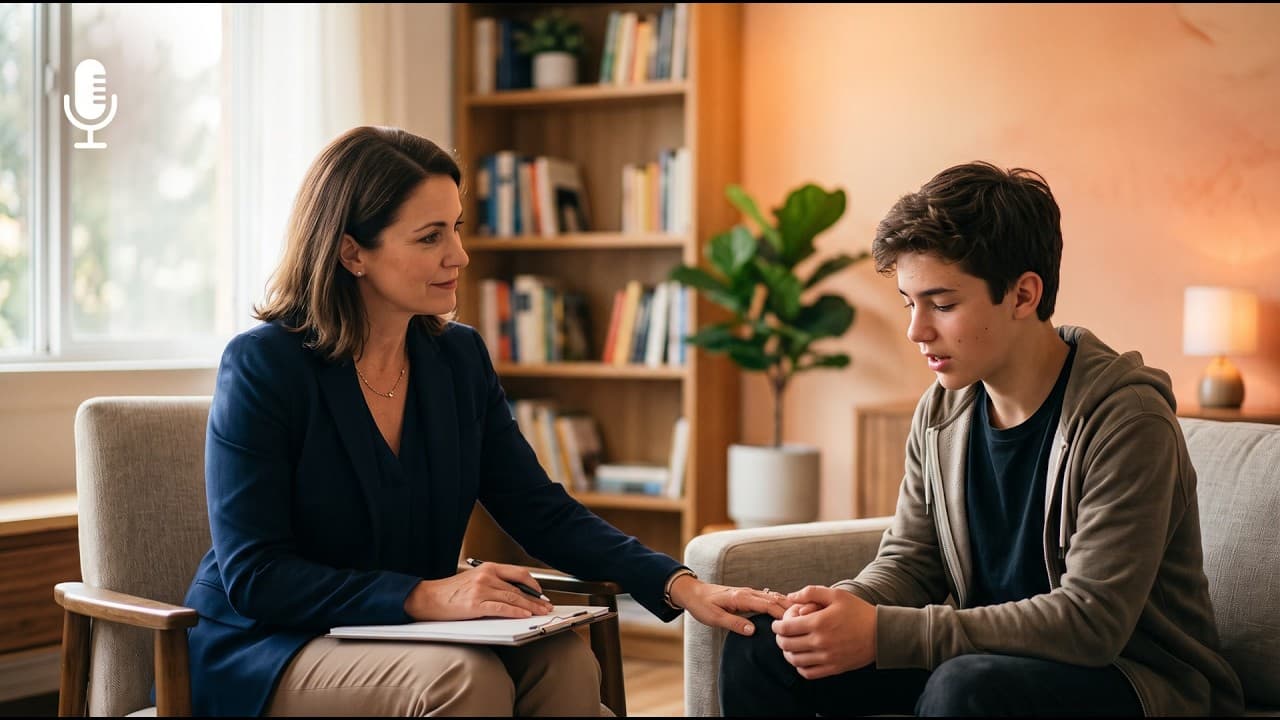
How to help a teen with severe depression? — Full Episode
How to help a teen with severe depression?
When a Teen Becomes the Parent: Sibling Care and School
Educators and parents: some of the most responsible kids in your building are also the most tired.

Diabetes, Asthma, Epilepsy and Worry: Helping Anxious Students
A student with epilepsy can be fully prepared to manage a seizure and still spend every class worrying about having one in front of classmates.
Need this kind of support in your school?
MentalSpace School delivers teletherapy, onsite clinicians, live workshops, and HB-268 compliance support to K-12 districts nationwide. Book a 15-minute call to see what fits.
Get started